
Customer Success Management uses internal expertise and market research to support customer success in every contact with the company.

For many years, the consumer goods industry was shaped by stability and continuity. That environment has changed fundamentally.
In many consumer goods markets, barriers to entry are continuing to decline. With the support of contract manufacturers, new brands and products can now be developed, produced, and marketed without the need for significant fixed-cost investments. At the same time, social media enables companies to engage relevant audiences worldwide with comparatively little spend. In parallel, e-commerce-focused FMCG and CPG businesses are gaining ground and increasing competitive pressure on established players.
Over many years, companies have optimized for extensive outsourcing, lean inventories, and concentrated supplier structures. In recent years, however, this model has exposed significant vulnerabilities across industries. Global crises have driven substantial cost increases and caused severe disruption throughout international supply chains.
Fast-moving trends on social media are forcing companies to adapt continuously to an increasingly dynamic market environment. At the same time, longer-term consumer trends such as sustainability and social responsibility are reshaping expectations and often challenging the credibility of established brands. In parallel, inflation, geopolitical uncertainty, and the economic outlook are weakening consumer sentiment and reducing brand loyalty. As a result, many consumers are trading down from premium products to more affordable entry-level alternatives, putting further pressure on branded manufacturers.

As market dynamics continue to evolve, business in the consumer goods industry is becoming significantly more complex. Revenue Growth Management (RGM) enables FMCG and CPG companies to navigate these new challenges effectively and strengthen their long-term profitability.
Revenue Growth Management, also referred to as Net Revenue Management (NRM), is becoming increasingly important across consumer goods companies in both the FMCG and CPG sectors. At the same time, there is still no universally accepted definition of the term, which means that, in practice, RGM is often associated with a broad range of initiatives and functional responsibilities.
We view Revenue Growth Management as a value-oriented management approach designed to translate a strong focus on revenue and profitability into actionable measures. These measures can be derived from a wide spectrum of marketing and sales levers and must always be aligned with the company’s specific situation and objectives. To unlock the full potential of RGM, companies need a clear strategic direction, robust analytical foundations, and consistent execution.
To unlock Revenue Growth Management potential in a structured and systematic way, we have developed an RGM Excellence Framework based on our consulting experience and proven best practices. At the highest level, the company’s overall strategy provides the guiding direction for RGM. This direction is translated into action through six core levers that help identify opportunities and turn strategy into concrete measures.
Data is at the heart of effective Revenue Growth Management and provides the foundation for the entire approach. Analytical tools support the evaluation of this data and enable better-informed decisions. To ensure that RGM initiatives deliver measurable results, performance should be monitored continuously through clearly defined KPIs and dashboards. This makes it possible to assess the effectiveness of individual measures and manage them in a targeted way. Because RGM is inherently cross-functional, it must be integrated into both strategic and operational business processes. In addition, companies need to build and continuously strengthen the relevant capabilities to secure the long-term success of RGM.
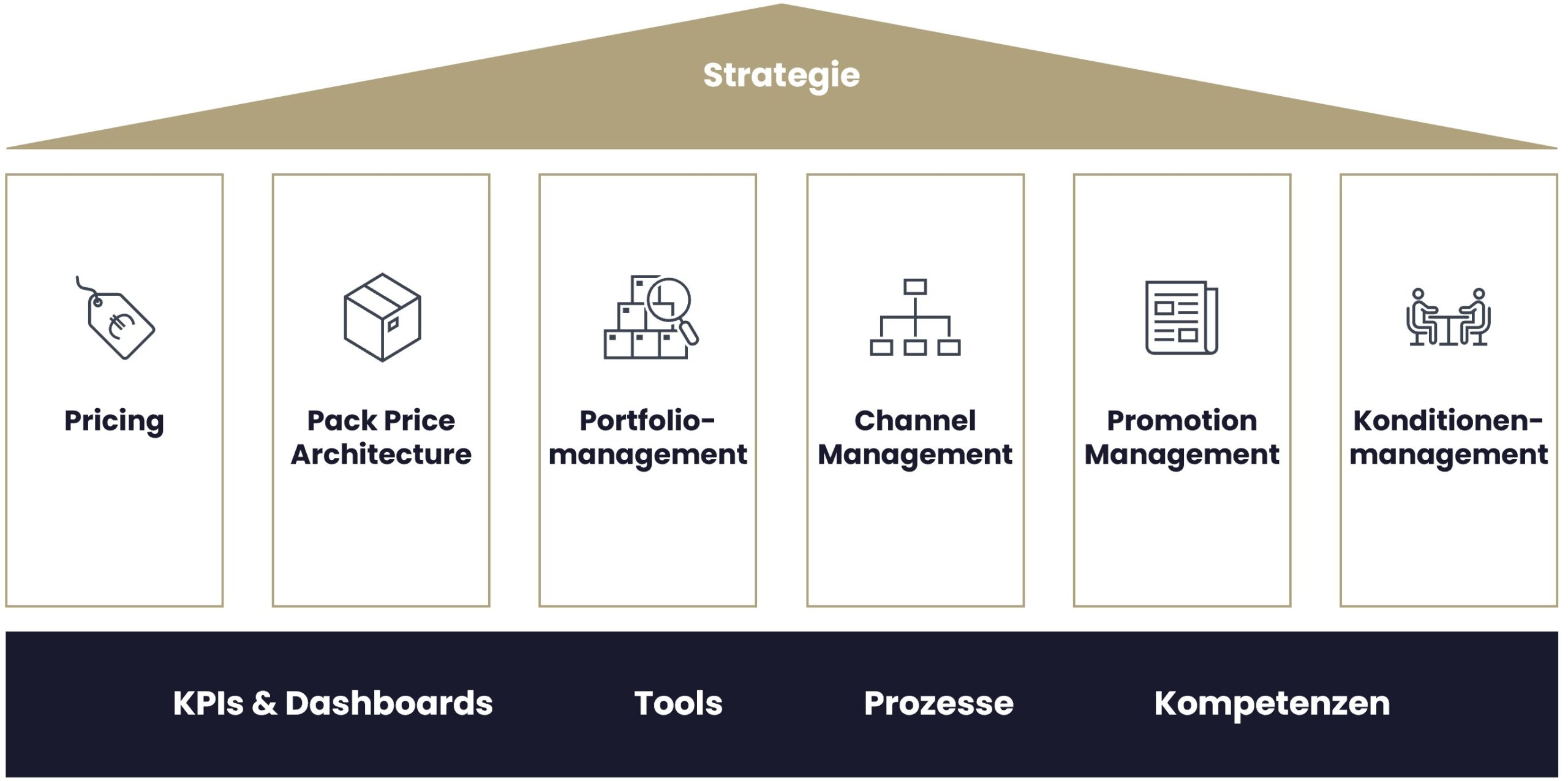
Prof. Roll & Pastuch Revenue Growth Management Framework
Existing pricing structures often do not fully capture the profit potential of products. Targeted pricing adjustments can help make better use of customers’ willingness to pay. When implementing price adjustments in the consumer goods sector, it is advisable to follow an approach that differentiates between brands and distribution channels. The objective should be to ensure a consistent pricing strategy both within the product portfolio and across the various channels.
With the help of internal and external data, it is possible to identify brands or products that offer room for a price increase or may even be priced too high and therefore hold greater sales potential at a lower price point. In doing so, price thresholds, price architecture, line pricing, and the relevant price elasticities should always be taken into account.
The implementation of price adjustments should be carried out and communicated consistently. We support you in this process, for example by developing sell-in templates based on value-driven arguments that demonstrate the necessity of the measures and highlight an approach that is fair from the retailer’s perspective.
The aim of this lever is to provide the right product variant and pack size at the right price point for each relevant consumer segment, purchase occasion, and sales channel.
In our project work, we frequently see the need to develop channel-specific pack formats. For example, discounters often require pack sizes that differ from those designed for full-range retailers in order to reflect different shopper needs and purchasing behaviors.
A well-designed mix of product variants, pack sizes, and price points enables companies to reach a broader set of target groups while responding more effectively and flexibly to competitive market dynamics.

Across many projects, we see portfolios in which a substantial number of products deliver negative gross margins while remaining part of the assortment, either intentionally or without active challenge.
Differences in product profitability can usually be traced back to a range of pricing- and cost-related factors. However, overall company profitability depends not only on margin per unit, but also on the sales volume of each SKU. This combination often reveals significant opportunities to optimize total portfolio profitability. We help companies identify and capture this potential, for example through strategic portfolio analysis.
Current economic uncertainty is having a clear effect on consumer purchasing behavior in the consumer goods sector and is reshaping the overall channel mix in the market. As demand shifts toward more affordable offers and providers, companies may need to optimize their listing strategy in a targeted way. This makes it essential to review whether the intended target groups are still being reached and to identify how they can be served even more effectively in the future through the right offers in the right channels.
At the same time, profitability often varies significantly across sales channels and among individual customers. These differences are typically driven by a range of structural and commercial factors. We help companies quantify these profitability differences, for example through contribution margin analyses for top customers, and define targeted measures based on those insights.

Promotional pricing in FMCG and CPG typically comes with lower percentage margins. At the same time, well-managed promotions can still deliver higher absolute profits if the resulting uplift in sales more than offsets the lower margin per unit.
In grocery retail in particular, leaflet promotions, whether print or digital, remain a widely used marketing instrument. Retailers feature selected manufacturer products in these leaflets and offer them at a temporary discount. In most cases, manufacturers support these activities through promotional trade terms and other commercial investments. This makes it critical to evaluate whether the promotion has actually delivered the desired results.
Although repeated promotional activity can significantly increase market share by stimulating demand through lower prices, the additional commercial investment required also puts pressure on contribution margins. Manufacturers therefore face a strategic trade-off between profitability and market share objectives. One important lever is the targeted selection of products within the brand portfolio for promotional support, with a focus on items that offer the strongest unit economics.
Especially in the consumer goods industry, many companies struggle with a high overall level of trade terms that has evolved historically and often lacks strategic consistency. In many cases, these terms are not sufficiently linked to the customer’s actual contribution or performance, meaning they fail to incentivize the desired behavior.
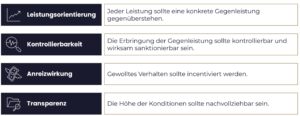
The structure and level of trade terms granted to retail partners should be clearly derived from the company’s strategic objectives. At the same time, the level of support should be differentiated according to each partner’s performance and commercial relevance in line with a pay-for-performance logic. A future-ready trade terms system is defined by the following characteristics:
The R&P RGM Audit assesses all relevant Revenue Growth Management topics within your organization. Its purpose is to identify optimization opportunities and profit levers across RGM. As part of the assessment, your current setup is benchmarked against RGM best practices. Based on the results, you receive clear recommendations for action along with a short- and medium-term implementation roadmap.
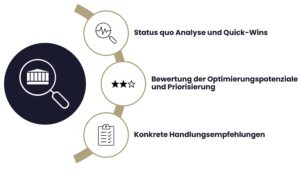
R&P RGM-Audit